


Rizal Technological University (RTU), through the National Service Training Program Office (NSTPO) and in partnership with the Philippine Red Cross–Rizal Chapter, concluded a three-day training program on Standard First Aid and Basic Life Support (BLS) CPR/AED held from September 29 to October 1, 2026, at the SNAGAH Penthouse.
The training aimed to equip NSTP instructors and staff with essential knowledge and practical skills in responding to emergencies and providing immediate assistance to individuals who may need help. It also provided participants with an opportunity to learn proper first aid procedures and understand the importance of staying calm, assessing the situation, and taking appropriate action during emergencies.
The activity was spearheaded by Dr. Elmer C. Pascual, NSTPO Director, and Associate Prof. Joven F. Andrada, Civic Welfare Training Service (CWTS) Coordinator. Their initiative supports the office’s efforts to strengthen the preparedness and safety of its instructors and staff, especially in situations that may require immediate response and assistance.
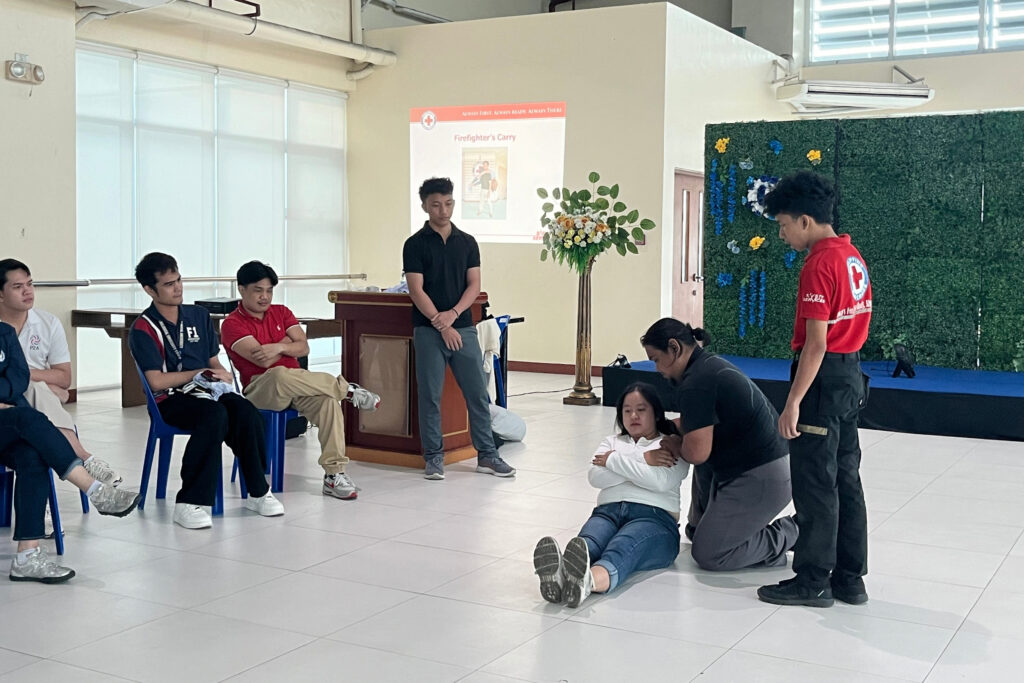
Throughout the three-day training, participants took part in lectures, demonstrations, discussions, and hands-on activities facilitated by Ms.Yvanna Arielle L. Santos and Mr. Christian Josh Ibis, Safety Service/Disaster Management Service Instructor from the Philippine Red Cross. The sessions allowed participants to gain a better understanding of how to respond to different emergencies and apply basic first aid techniques correctly.
Participants were trained to assess emergencies, identify the appropriate response, administer basic first aid, and seek professional medical assistance when necessary. The practical activities also allowed them to apply what they learned through simulations and guided exercises, helping them become more familiar with the proper steps to take during an emergency.
The training covered different types of emergencies, including cardiac, breathing, bleeding, injury, medical, environmental, and special emergencies. These sessions helped participants understand how emergencies can vary and why proper assessment is important. The training also provided practical knowledge on responding to life-threatening situations.
Through demonstrations and hands-on simulations, participants were given an opportunity to practice appropriate emergency response procedures and understand the importance of providing immediate assistance while waiting for professional medical responders.
Through this initiative, RTU-NSTPO continues to promote safety and preparedness among its personnel. By providing instructors and staff with basic first aid and life-saving skills, the training strengthens their ability to respond to emergencies. The knowledge and skills gained from the training will also be shared with NSTP students, helping them become more aware, prepared, and confident in responding to emergencies.