


Rizal Technological University (RTU) formally observed the Open Governance Week with a hybrid flag-raising ceremony at the RTU Penthouse on May 18, 2026, anchored by the theme “Championing Participation, Advancing Transparency, Empowering Innovation.” The event served as a platform for senior university officials to present concrete governance initiatives that collectively advance RTU’s institutional commitment to open, accountable, and participatory public service in higher education.
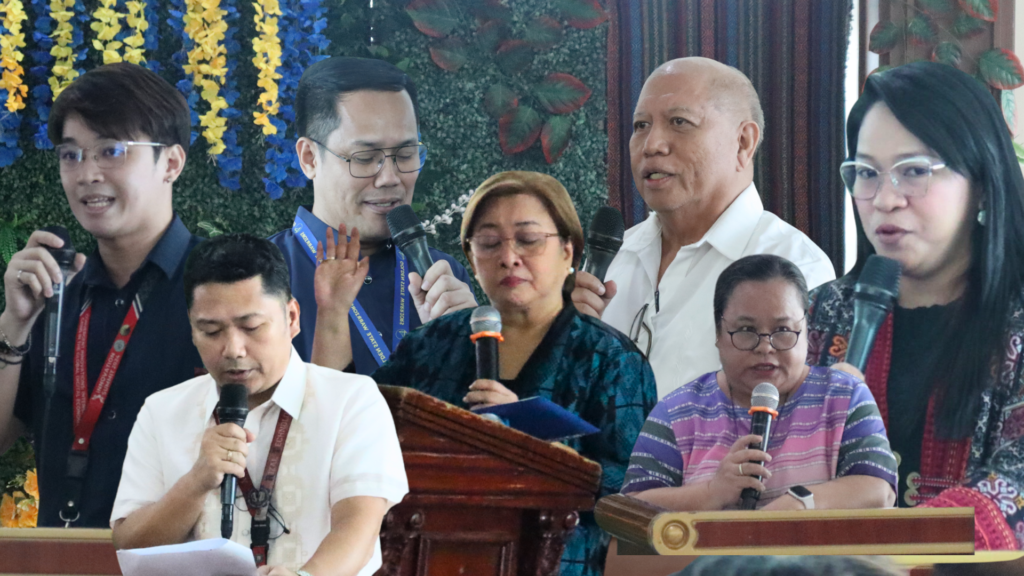
The ceremonial program was formally opened by Dr. Salvacion J. Pachejo, Vice President for Planning, Quality Assurance, and Systems Integration (VPPQASI), whose Opening Remarks set the tone of governance for the occasion. University President Dr. Ma. Eugenia M. Yangco subsequently delivered a message reaffirming RTU’s institutional alignment with the national Open Government Partnership framework, and led the administration of the Open Government Pledge—a collective affirmation of the Rizaliano community’s commitment to transparency and citizen participation as pillars of public governance.
President Yangco likewise presided over the Oath-Taking of Newly Appointed RTU Employees, a formal rite of institutional induction that underscores the university’s emphasis on civil service accountability from the outset of public employment.
The substantive highlights of the program featured a series of sectoral presentations aligned with the week’s open governance theme. Dr. Alfred Potenciano, Resident Physician of the Health Services Unit (HSU), presented Open Governance through Participatory Engagement on Health and Wellness Concerns, illustrating how transparent health service delivery and community-driven wellness programs constitute a meaningful dimension of inclusive institutional governance.
Assoc. Prof. Donato Estocada, Director of the International Affairs and Linkages Office (IALO), presented Open Governance through Global Partnerships and Recognitions, highlighting RTU’s growing international academic engagements as outcomes of transparent and collaborative institutional diplomacy. The presentation reinforced the view that global partnerships, when pursued with accountability and openness, serve as institutional validators of RTU’s governance maturity.
Engr. Niño Curpos, Director of the Project Management Office (PMO), presented Open Governance: Transparent Infrastructure Development, detailing the university’s ongoing capital projects and its commitment to public disclosure in physical resource planning and expenditure. The presentation underscored RTU’s recognition that infrastructure governance, when made visible and accessible to stakeholders, functions as a critical instrument of institutional trust-building.
IT Officer Kyle Alcantara, Director of the Management Information Systems Office (MISO), presented Open Governance Innovation: Digitalization Roadmap and Initiatives, elaborating on RTU’s strategic digital transformation agenda as a means to greater institutional efficiency, data-driven decision-making, and enhanced public access to university services and information.
Among the most notable presentations of the observance were two UPAO-led digital governance initiatives unveiled by Dr. Sheila Manahan, Director of the University Public Affairs Office (UPAO). The first, the Open Governance Chatbot: P.I.D.A.S. is an AI-assisted public interface engineered to facilitate real-time stakeholder queries, reducing bureaucratic friction and enabling more responsive communication between the university and its constituents. The second is the Website QR Project R.E.S.P.O.N.D., a structured digital feedback mechanism that allows RTU stakeholders to submit concerns, observations, and recommendations directly through the university’s official website. Both systems embody RTU’s deliberate investment in technology-mediated transparency and represent a significant step toward institutionalizing open governance as an everyday operational practice rather than a periodic ceremonial commitment.
The RTU Open Governance Week observance affirms the university’s enduring resolve to embed the principles of transparency, accountability, and participatory governance into its institutional culture. Through the convergence of policy, technology, and sectoral engagement, RTU continues to distinguish itself as a model of democratic governance in the Philippine state university landscape — one that regards openness not merely as a legal obligation, but as a fundamental expression of its identity as an Iskolar ng Bayan institution.