



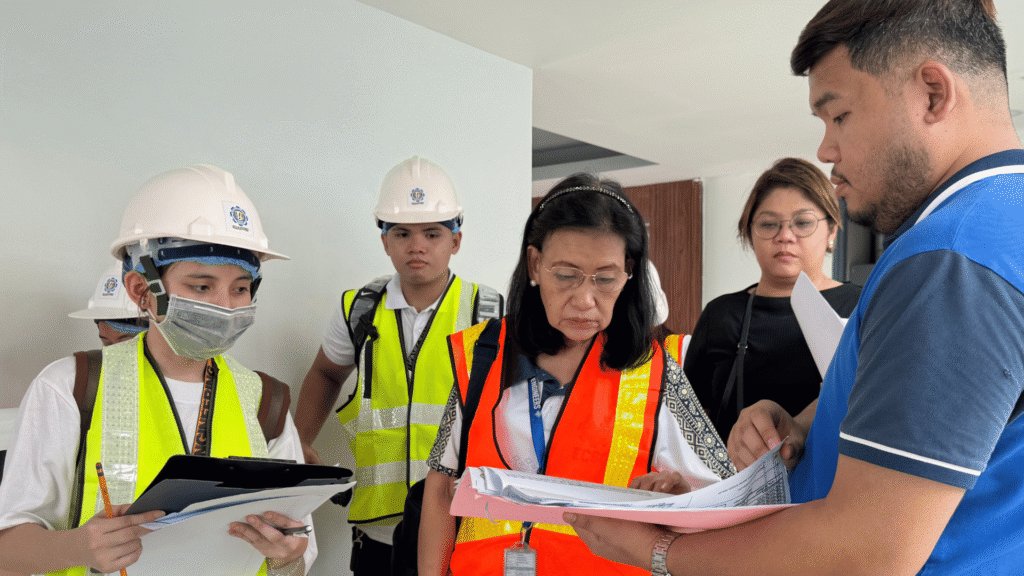
In a powerful collaboration with the Local Government Unit (LGU) of Pasig City, students from Rizal Technological University (RTU) Civil Engineering Department stepped out of the classroom and onto the field to witness engineering in action, as the CE Department launched its extension program titled “Project S.T.E.P.: Strengthening Technical Engagement in Civil Engineering for Pasig” on May 19, 2026.
The program was designed to provide students with meaningful exposure to civil engineering practices by monitoring and assessing ongoing and completed infrastructure projects in Pasig City.
The activity focused on evaluating the condition, progress, and implementation status of various infrastructure projects in the city. Through this initiative, participants had the opportunity to observe how civil engineering principles are applied in real public infrastructure projects, particularly in areas such as construction monitoring, project evaluation, site inspection, and quality assessment.
During the program, the students, together with the faculty and personnel involved, visited selected infrastructure sites identified in coordination with the LGU Pasig. The activity allowed the participants to gain a deeper understanding of the standards, procedures, and responsibilities involved in infrastructure development. They observed both ongoing and completed projects, noting the importance of proper planning, safety compliance, structural quality, and timely project implementation.
The partnership with the LGU Pasig played a vital role in the successful conduct of the extension activity. Their support and coordination enabled the participants to access relevant project sites and gain firsthand knowledge of local infrastructure development efforts. This collaboration also strengthened the relationship between the academic institution and the local government, promoting community engagement and practical learning.
This extension initiative bridged classroom learning with real-world civil engineering practice. It provided students with practical insights into infrastructure monitoring while contributing to the department’s commitment to community service, technical engagement, and professional development. The activity highlighted the importance of collaboration between educational institutions and local government units in preparing future civil engineers to become competent, responsible, and community-oriented professionals.