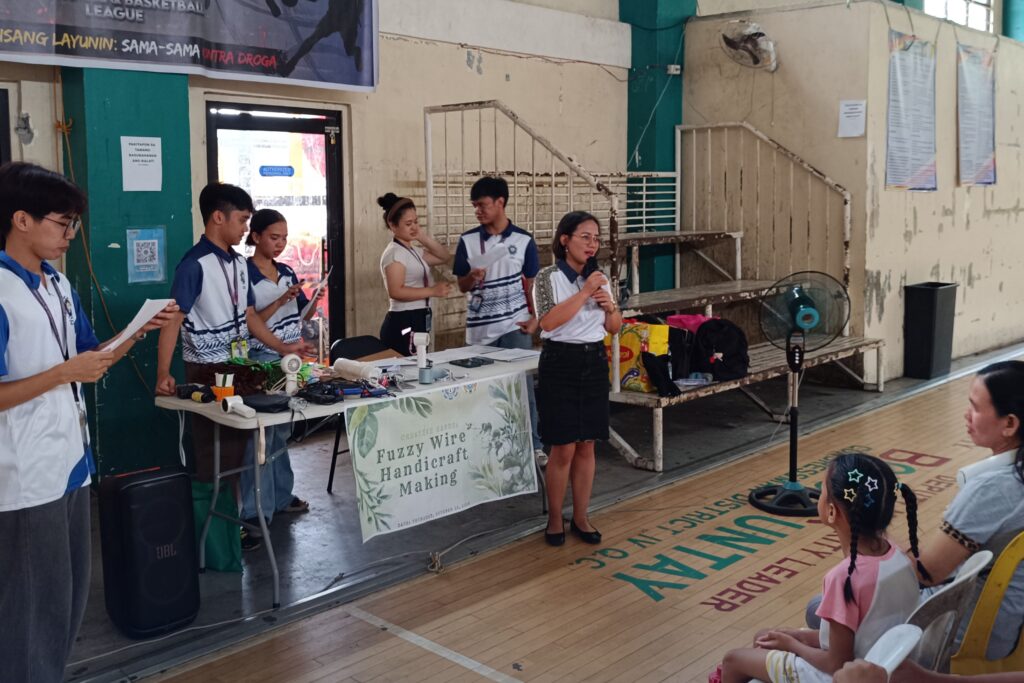


Extensionists from the College of Education (CEd) of Rizal Technological University (RTU) foster youth creativity and practical skills through handicraft-making among children, parents, and teenagers from Barangay Old Capitol Site, Quezon City, as part of the outreach program entitled “Creative Hands: Fuzzy Wire Handicrafts Making”. The activity, held on October 15, aims to provide young individuals with opportunities to explore new hobbies and discover potential sources of income.
To promote creativity and hands-on learning among the participants, Instr. Angeline V. Villareal, along with students from the Bachelor of Technical-Vocational Teacher Education (BTVTEd) major in Garments, Fashion, and Design Department, and in partnership with the Sangguniang Kabataan (SK) of Old Capitol Site, introduced the participants to the art of fuzzy wire handicrafts while enhancing their creativity, patience, and practical skills through a guided and enjoyable learning experience.
In the opening remarks, the SK Chairperson of Old Capitol Site emphasized the importance of community participation and activities that provide meaningful learning opportunities for residents. This was followed by Instr. Villareal, who discussed the objectives of the program and encouraged participants to explore their creativity through handicrafts.
The first learning session focused on introducing handicrafts, their benefits, and the safety precautions to observe throughout the activity. Participants learned that handicraft-making can be both a relaxing and productive hobby, allowing them to express their creativity while developing patience, concentration, and fine motor skills. The session also highlighted the value of utilizing readily available and reusable materials, such as cardboard, in creating handicraft projects and promoting practical and resourceful crafting practices.
Moreover, the activity presented participants with opportunities to explore the potential of handicrafts as a source of livelihood. As handmade crafts, particularly decorative flowers and floral arrangements, continue to gain popularity online, participants were encouraged to recognize how their creativity and newly acquired skills could potentially generate additional income. Through this discussion, the program emphasized that handicraft-making is not merely a recreational activity but can also open opportunities for entrepreneurship and livelihood development.
The second session featured a hands-on demonstration of fuzzy wire handicraft-making. Under the guidance of the facilitators and student volunteers, participants followed step-by-step instructions in creating a flower base and forming different types of flowers using fuzzy wires. The demonstration enabled participants to observe proper techniques before applying them to their own creations. With the assistance of the facilitators, they were able to practice the process, experiment with various flower designs, and develop confidence in creating their own handicrafts.
Throughout the activity, participants were given opportunities to learn through hands-on experience, ask questions, and share ideas while creating their floral crafts. The interactive nature of the program encouraged creativity, cooperation, and active participation among children, parents, and teenagers. It also demonstrated how simple materials can be transformed into decorative handmade products through patience, imagination, and proper techniques.
The outreach program provided participants with practical knowledge and a new skill that they could continue developing at home. Beyond serving as a creative hobby, fuzzy wire handicraft-making can encourage resourcefulness, promote the responsible use of available materials, and inspire individuals to explore small business opportunities through handmade products. The activity highlighted the importance of providing accessible, community-based learning experiences that contribute to personal growth and livelihood awareness.
Through “Creative Hands: Fuzzy Wire Handicrafts Making”, RTU and the SK Old Capitol Site demonstrated their commitment to community engagement, skills development, and meaningful educational opportunities. The program served as a reminder that creativity can be nurtured through simple activities and that practical skills, when continuously developed, can become valuable tools for self-expression, lifelong learning, and potential entrepreneurial endeavors.