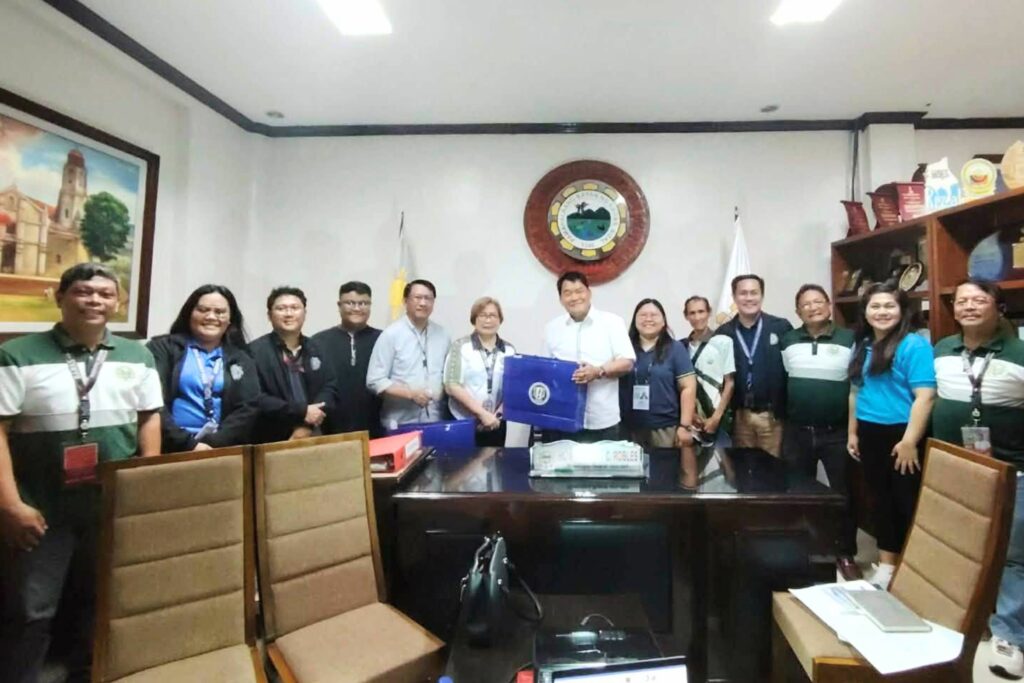


Rizal Technological University (RTU) and the Municipality of Baras, Rizal took a significant step toward advancing sustainable agriculture and community development through an exploratory meeting on the proposed establishment of an RTU Farm-to-Food Facility within RTU’s property in Baras.
The exploratory discussion brought together RTU officials and the leadership of the Municipality of Baras to identify potential areas of collaboration that will strengthen local agriculture, empower farmers, and promote inclusive economic growth.
The RTU delegation was led by Dr. Ma. Eugenia M. Yangco, University President, together with Dr. Magno M. Quendangan, Vice President for Research, Innovation, and Extension Services (VPRIES); Assoc. Prof. Donato Z. Estocada, Director of the International Affairs and Linkages Office (IALO); Assoc. Prof. John Eric O. Estrellado, Director of the Research Management Office; Engr. Nino Curpos, Director of the Project Management Office (PMO); and Ms. Jezalyn Sumilla from the Financial Services Management Office.
Representing the Municipality of Baras was Mayor Wilfredo Robles, who led the LGU delegation in exploring possible areas of cooperation with RTU.
The proposed RTU Farm-to-Food Facility envisions creating a sustainable agricultural ecosystem where local farmers will be encouraged and supported to cultivate malunggay (moringa), which may be purchased directly by the facility for processing and utilization. The initiative aims to establish a stronger connection between farmers, innovation, and market opportunities.
Through this partnership, RTU seeks to provide a platform where agricultural production is complemented by research, technology, and community engagement. The facility is envisioned not only as a food production center but also as a venue for innovation, training, and knowledge transfer for farmers and community stakeholders.
For the farmers of Baras, the proposed initiative may provide opportunities for increased livelihood, more stable market access, and participation in a sustainable agricultural value chain. By encouraging the cultivation of malunggay, farmers can diversify their agricultural activities while contributing to local food security and nutrition initiatives.
For the Municipality of Baras, the collaboration represents an opportunity to strengthen local economic development, enhance agricultural productivity, support community-based enterprises, and advance the municipality’s sustainability agenda.
The exploratory meeting reflects the shared commitment of RTU and the LGU of Baras to develop programs that transform communities through education, innovation, and partnerships. By combining the expertise of the University and the local knowledge of farmers, the initiative aims to create a model of university-community collaboration that generates lasting social and economic impact.
The proposed Farm-to-Food Facility aligns with the United Nations Sustainable Development Goals (SDGs), particularly SDG 1: No Poverty through livelihood generation; SDG 2: Zero Hunger through food security initiatives; SDG 8: Decent Work and Economic Growth by promoting sustainable economic opportunities; SDG 9: Industry, Innovation, and Infrastructure through innovation-driven agricultural development; and SDG 17: Partnerships for the Goals through strengthened collaboration between the academe and local government.
As RTU continues to expand its role as a catalyst for sustainable development, the University remains committed to bringing its expertise and innovation closer to communities—creating solutions that empower people and build a more resilient future.