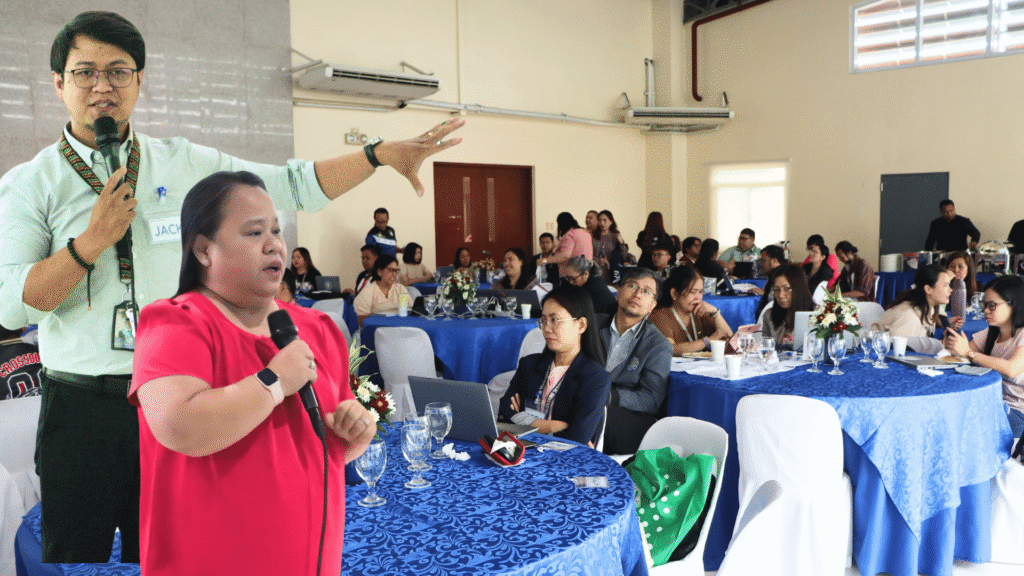


The Quality Assurance Office (QAO) of Rizal Technological University (RTU) convened a rigorous three-day workshop on institutional quality improvement, grounded in the performance excellence framework. Conducted on February 9 and 11–12, 2026, at the Penthouse of the SNAGAH Building, the program was designed specifically for university officials holding managerial or directorial positions.
These leaders, responsible for overseeing academic, administrative, and operational functions, were equipped with advanced tools to rigorously assess and elevate institutional quality against internationally recognized standards. This initiative underscores RTU’s strategic alignment with global higher education benchmarks and promotes systemic improvements in governance, teaching, and service delivery.
Dr. Jack Robert B. Sablan, Director of the QAO, orchestrated the event as principal coordinator, ensuring a blend of theoretical instruction and practical application. The opening proceedings were elevated by a presidential address from RTU President Dr. Ma. Eugenia M. Yangco, who emphasized the imperative of quality-driven leadership in a competitive academic landscape, complemented by welcome remarks from Dr. Salvacion J. Pachejo, Vice President for Planning, Quality Assurance, and Strategic Initiatives.
The workshop’s curriculum methodically traversed the seven core categories of the performance excellence framework across three immersive sessions, incorporating lectures, case studies, group analyses, and hands-on exercises to reinforce learning. On Day 1 (February 9), participants delved into the foundations, beginning with a comprehensive overview of the framework’s structure, which integrates leadership, strategy, customers, measurement, workforce, operations, and results as a holistic diagnostic for organizational health. Sessions on organizational profiling enabled officials to map RTU’s unique context, including its mission, vision, and environmental challenges, while leadership principles highlighted the role of ethical governance in driving cultural transformation.
Day 2 (February 11) shifted to strategic and analytical dimensions, examining strategic planning processes that align institutional goals with stakeholder needs, alongside customer engagement strategies tailored to students, faculty, and partners. Measurement, analysis, and knowledge management were explored through data analytics workshops, where participants practiced interpreting key performance indicators (KPIs) like student outcomes and resource efficiency to inform evidence-based decisions and cultivate a learning organization.
Day 3 (February 12) culminated in operational and evaluative components, focusing on workforce empowerment through talent development models that enhance faculty retention and innovation. Operational excellence sessions examined process optimization techniques, including lean methodologies adapted for academic settings, to streamline administrative workflows and academic delivery. Results evaluation introduced balanced scorecard approaches for measuring mission fulfillment, while forward-looking implementation planning guided participants in crafting actionable roadmaps, complete with timelines, metrics, and accountability structures, to propel RTU toward accreditation readiness and escalating levels of quality maturity.
Through these sessions, the university officials acquired proficiency in articulating the performance excellence framework’s relevance to higher education, explaining its core values, and navigating organizational profiles, categories, and multidimensional evaluation criteria. They gained skills to conduct self-assessments, pinpointing strengths—such as RTU’s robust community outreach — and opportunities for improvement, including digital infrastructure enhancements. Ultimately, participants were prepared to steer their units toward formal recognition and sustained excellence, marking a transformative step in RTU’s pursuit of international competitiveness.