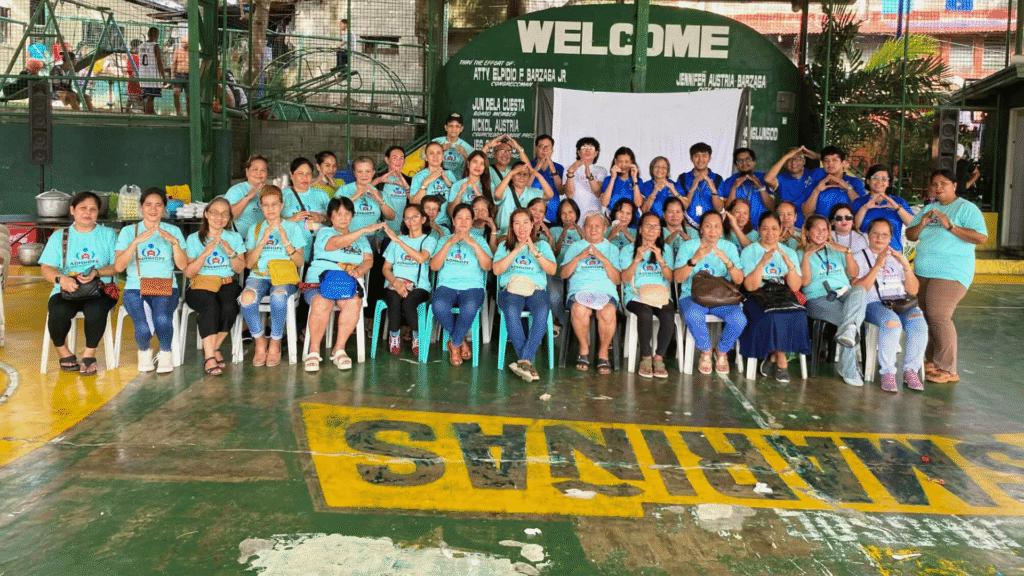


The Civil Engineering (CE) Department of Rizal Technological University (RTU), in collaboration with the Extension and Community Services Office (ECSO), conducted its extension program, titled “Building a Common Vision to Learn New Ways for Construction and Home Safety, Health, Repair, and Maintenance”, on November 22, 2025 and held at the SOS Umakap Ka Covered Court, Brgy. Fatima 1, Dasmariñas, Cavite: the event was organized in partnership with Habitat for Humanity Philippines Inc. and ADHHOPE Homeowners Association, Inc., bringing together volunteers and beneficiaries for a day of skill-building and knowledge-sharing.
Spearheaded by Project Leader Engr. Joben C. Guevarra, the initiative was supported by a dedicated team from the CE Department, including Engr. Lorenzo C. Caranguian, Engr. Kristine Joy A. Castillo, Engr. Nestor C. Competente, Prof. Zorahayda V. Concepcion, Inst. Jethro Jhames A. Jose, Engr. Aleli N. Rey, Engr. Cyrille F. Dela Cruz, and Engr. Alvin C. Dela Torre.
The program opened with the welcome remarks of Engr. Aleli N. Rey, Department Head of the CE Department. Her message emphasized the importance of community-based learning and the shared responsibility for ensuring safe, resilient housing.
Sessions began with Engr. Alvin C. Dela Torre’s discussion of the fundamentals of house structure, construction materials, basic plumbing, and essential home repair techniques. Participants engaged enthusiastically, asking about material durability, plumbing safety, and practical repair methods—queries that Engr. Dela Torre addressed with real-world examples from his professional experience.
Session 2 commenced with Engr. Joben C. Guevarra, who presented techniques for painting and finishing, proper waste disposal, and essential principles of disaster risk reduction and preparedness. Attendees raised timely concerns regarding community emergency protocols and the incorporation of disaster-resilient design in low-income housing. Engr. Guevarra highlighted the importance of risk mapping, early warning systems, and community cooperation, encouraging participants to reflect on their local practices and vulnerabilities.
The workshop formally concluded with the closing remarks that recognized the active involvement and commitment of all participants. Beneficiaries, volunteers, and faculty members collectively affirmed the value of the training in strengthening their technical knowledge and their readiness to address disaster-related challenges.
Overall, the extension service achieved its goals of enhancing community skills, strengthening resilience, and fostering collaboration among RTU, Habitat for Humanity Philippines, and ADHHOPE. The program’s success underscores RTU’s ongoing commitment to inclusive development and capacity-building, solidifying its role as a catalyst for sustainable progress within and beyond its academic community.