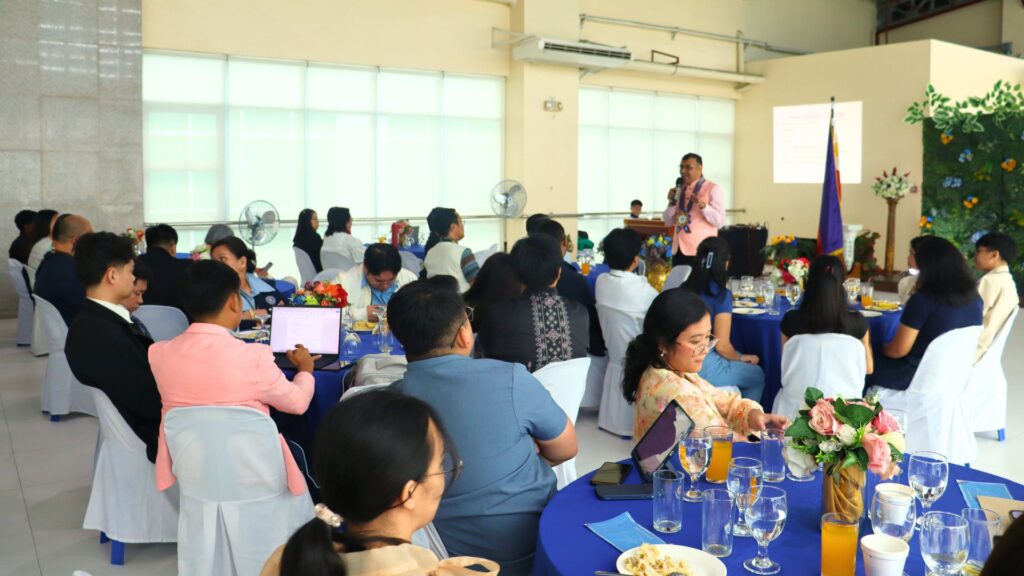


Rizal Technological University (RTU), through the International Affairs and Linkages Office (IALO) and Research, Development, and Innovation Office (RDIO), successfully conducted the academic session titled “Pathways to High-Impact Research” on March 2, 2026, at the Penthouse, RTU Main Campus.
The event featured Dr. Vikas Kumar, Professor from the Central University of Haryana, India, as the keynote speaker. The session brought together university officials, faculty members, researchers, graduate students, and administrative staff, highlighting RTU’s strong institutional drive toward research excellence and internationalization.
In her message, University President Dr. Ma. Eugenia M. Yangco emphasized that meaningful international partnerships are essential in elevating the University’s research productivity and global academic presence. She underscored that collaborations with scholars such as Dr. Kumar provide RTU with strategic direction to achieve higher-impact publications and align research outputs with global standards, particularly in Scopus-indexed journals. She reiterated that research must move beyond compliance and become a vehicle for innovation, relevance, and societal contribution.
Meanwhile, Dr. Quendangan, Vice President for Research, Innovation, and Extension Services (VPRIES), reaffirmed RTU’s commitment to building a sustainable and competitive research ecosystem. He stressed that initiatives such as this academic session form part of a long-term strategy to equip faculty members and graduate students with the skills necessary to engage confidently with international research platforms.
During his lecture, Dr. Kumar focused on enhancing research quality and identifying high-impact publication opportunities. He discussed practical strategies for selecting the right journal, understanding journal scope and indexing criteria, and determining the most appropriate platform for presenting and publishing scholarly work. He emphasized the importance of aligning research themes with current global conversations, ensuring methodological rigor, and carefully evaluating journal metrics and credibility before submission. Drawing on his extensive academic experience and international engagements, he provided concrete examples and guidance that faculty members and graduate students can apply directly to their own research projects.
Participants actively engaged in discussions, particularly on refining manuscripts for submission and exploring interdisciplinary approaches that connect research outputs to broader themes such as sustainability and responsible development.
The session also served as a preparatory orientation for RTU’s upcoming hosting of the 9th International Conference on CSR & Development, scheduled on June 8–9, 2026, in Manila and online. The conference will bring together global scholars and practitioners. It will offer RTU faculty and students an opportunity to present their research and potentially pursue publication opportunities through international academic networks.
Through this initiative, RTU continues to strengthen its research culture by providing its faculty members, researchers, graduate students, and staff with access to international expertise and publication opportunities. The University remains committed to ensuring that research outputs extend beyond academic requirements and contribute meaningfully to the global body of knowledge.