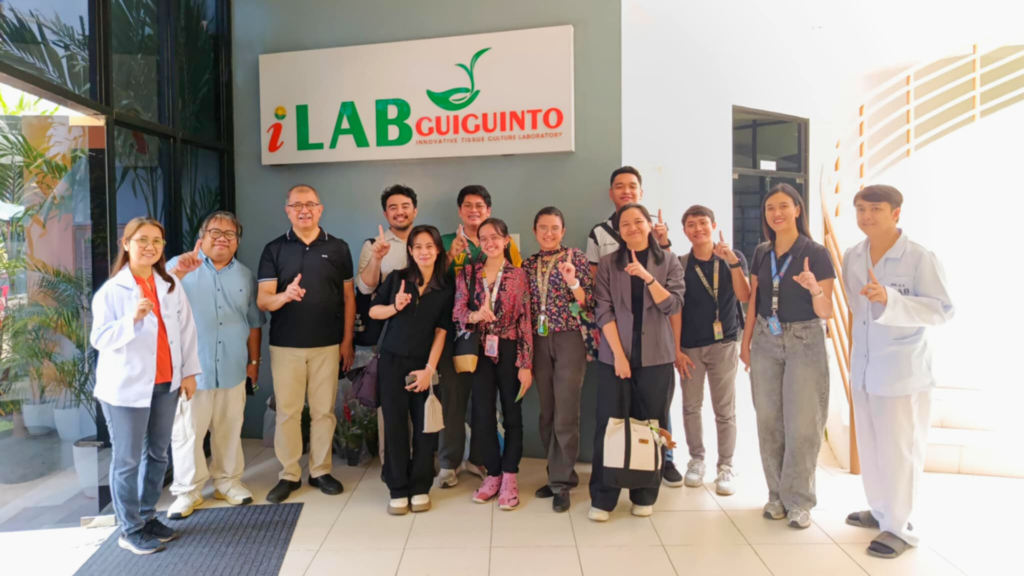


The BS Biology Department of Rizal Technological University (RTU) visited the Innovative Tissue Culture Laboratory (iLAB) at Guiguinto, Bulacan, to provide students with hands-on learning experience and a deeper understanding of modern plant propagation techniques used in horticulture and plant biotechnology.
The ILAB facility is recognized as the first local government unit–owned tissue culture laboratory for ornamental plants in the Philippines, established through the collaboration of the Department of Science and Technology and the municipal government of Guiguinto. The laboratory supports the development and propagation of ornamental plants using advanced tissue culture technology to produce healthy and disease-free plant varieties.
The RTU delegation included Former DOST Secretary Dr. Fortunato Dela Peña, who now serves as a Research Consultant for the University, several faculty members and select students from the Biology Department.
The visit, held on March 12, 2026, introduced the delegation to the basic principles of plant tissue culture, a scientific technique used to grow plant cells, tissues, or organs under sterile conditions in a controlled laboratory environment. This method allows the rapid production of large numbers of identical plants from a single parent plant, ensuring quality, uniformity, and resistance to diseases.
Laboratory Specialist Ma. Cecilia C. Santos, Garden City Multipurpose Cooperative Chair, Aira Ronalie Santos, and other laboratory personnel led the delegates through a tour of the laboratory facilities, where they observed different areas involved in the tissue culture process, including the media preparation room, transfer room, culture room, and acclimatization area. The host institution also explained the procedures involved in preparing nutrient media, sterilizing plant materials, and transferring plant tissues into culture containers using specialized equipment.
The educational visit also highlighted the importance of tissue culture in supporting the ornamental plant industry in Bulacan. Known as the “Garden Capital” of the province, Guiguinto has a thriving ornamental plant sector, and the iLAB facility helps local growers improve plant production through scientific methods and innovative technologies.
The faculty members also took the opportunity to propose a collaboration among the University, iLAB, and the Municipal Government of Guiguinto on ornamental plant production technologies and potential training for Rizalianos.
Beyond its educational benefits for the student delegates, the visit served as a step towards another potential meaningful partnership for RTU. With iLAB’s expertise in tissue culture and plant propagation, Rizalianos from the Biology Department can gain valuable knowledge and experience once a formal understanding between the institutions is established.